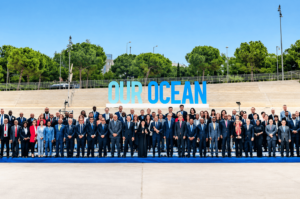
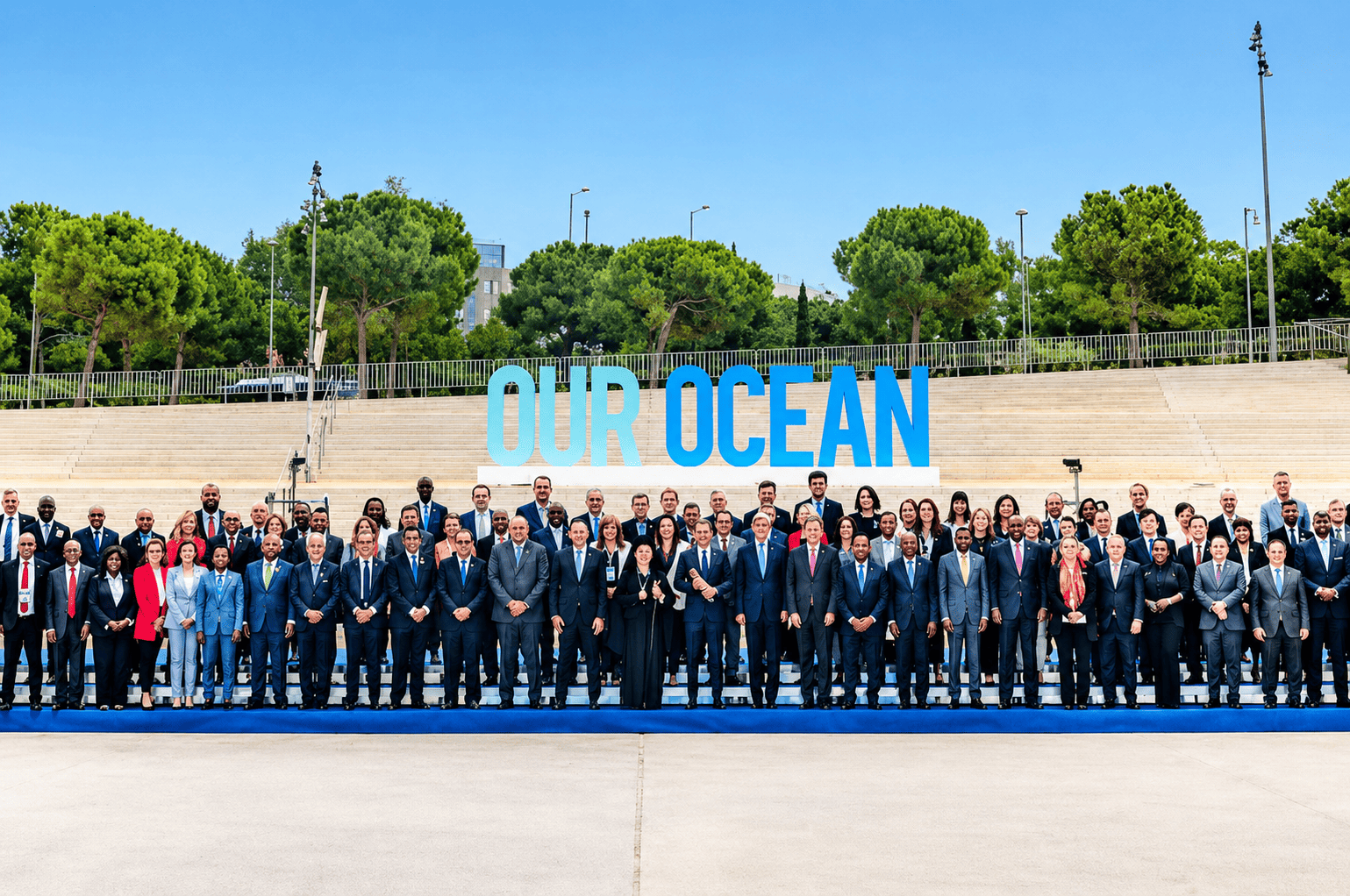
Two months after the Nouakchott Declaration, West African countries reaffirmed, in Mombasa, Kenya, at the 11th edition of the “Our Ocean ” Conference, their commitments to the implementation of the BBNJ Agreement, the achievement of the global 30×30 target, and a strengthened governance of their fisheries.
The curtains came down on the 11th edition of the “Our Ocean Conference”. Beyond the strong participation of West Africa in this global event, Côte d’Ivoire, Guinea-Bissau, and Senegal reaffirmed, during a side event organized by the PRCM, their commitments to the conservation of their marine ecosystems for the benefit of the habitats and populations that depend on them.
Guinea-Bissau is determined to achieve the 30×30 target before the end of this decade
Known as a model student in coastal and marine biodiversity conservation in West Africa, with over 26.3% of its national territory currently integrated into the National System of Protected Areas, including approximately 10% under marine protection, Guinea-Bissau intends to maintain its status. Through its Minister of the Environment and Climate Action, Mr. Carlos Henrique De Jesus Pinto Pereira, the country reaffirmed its ambitions to “move significantly closer to the global 30×30 target. “Guinea-Bissau is determined to achieve the 30×30 target before the end of this decade. To this end, we are moving forward with the creation of our second UNESCO Biosphere Reserve, covering Jeta, Pecixe , and Cacheu in the north of the country ,” he stated.
This initiative is complemented by the process of creating a new management and conservation zone in the Unhocomo and Unhocomozinho complex, an area of great ecological, economic, and social importance. Through this action, Guinea-Bissau is pursuing a dual objective: to protect endangered species and critical habitats, while ensuring the preservation of the livelihoods of the fishing communities living in this region.
Senegal plans to double the size of its marine protected areas.
As the ratification process for the BBNJ Agreement enters its final phase, Senegal is demonstrating its ambitions regarding the global 30×30 target: doubling the coverage of marine protected areas within its Exclusive Economic Zone (EEZ). “Our current network of 17 marine protected areas covers 5% of our national EEZ. Thanks to this new commitment, at least 10% of the EEZ will benefit from high and total protection by 2030,” stated Mr. Aliou Gori Diouf, Senegal ’s Minister of the Environment and Ecological Transition, who was participating in a the side event organized by the PRCM on the sidelines of the “Our Ocean” conference.
To achieve this ambitious goal, the country plans to first lay clear foundations through the updating of its National Strategy for Marine Protected Areas ” whose main objective will be to conserve marine biodiversity, spawning grounds and promote fish restocking, while improving the living conditions of local communities,” concluded Mr. Diouf .
Ivory Coast plans to protect 20% of its EEZ by 2023
Having recently joined the countries covered by the PRCM, Côte d’Ivoire does not intend to remain idle in the face of the new environmental order. ” As part of the implementation of the 30×30 target, the country conducted, in 2026, a marine spatial planning study, with the support of Oceans5, in order to plan new MPAs, taking into account scientific, social and economic data,” announced Mr. Kouadio Kouakou Parfait, the Chief of Staff of the Ministry of the Environment, Sustainable Development and Ecological Transition of the Republic of Côte d’Ivoire.
As a result of this process, six sites have been identified for the creation of new MPAs. This will contribute to the establishment of a national network of seven MPAs by 2023, covering a marine area of 34,000 km², thus increasing the protected area from 2% to 20% of the EEZ . Furthermore, within the framework of the implementation of the BBNJ agreement, Côte d’Ivoire, in a spirit of cooperation with West African countries, aims to contribute to the creation of MPAs in the high seas.
Strengthening fisheries governance in Guinea-Bissau
There is no doubt that the new environmental commitments made by West African countries must be closely analyzed in conjunction with the fisheries sector which guarantees food security and livelihoods for millions of people. As Ms. Virginia Maria Da Cruz Godihno Pires Correia, Minister of Fisheries and Maritime Economy of the Republic of Guinea-Bissau, so aptly reminded us, “The challenge we face is not simply to protect 30% of our marine areas by 2030. The real challenge is to ensure that all our marine resources are managed sustainably, equitably, and based on the best available scientific data. Achieving the 30×30 target requires a genuine paradigm shift in fisheries governance,” she stated.
To guarantee this, Guinea-Bissau has undertaken major reforms in its fisheries and maritime sectors. These include: co-management mechanisms established in the countries’ estuaries; the validation of the Management Plan for sardinella and bonga shad fisheries; and the strengthening of the legislation on marine pollution, which targets polluting vessels, including fishing vessels. Finally, the country has just banned, through a Ministerial Decree, the production of fishmeal and fish oil from small pelagic fish throughout the national territory , which constitutes both a fisheries management measure and an act of ecological conservation.
Call for regional and international cooperation
Protecting the oceans and strengthening fisheries governance in West Africa require a shared vision. Senegal, Guinea-Bissau, and Côte d’Ivoire are aware of this and call for a united effort and a shared vision with all countries in the region, the PRCM, and international technical and financial partners, in order to build strong West African leadership in achieving the 30×30 target and promoting a sustainable, inclusive, and resilient blue economy.