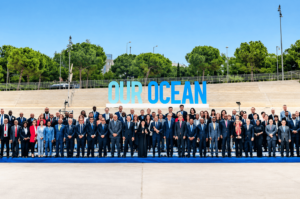
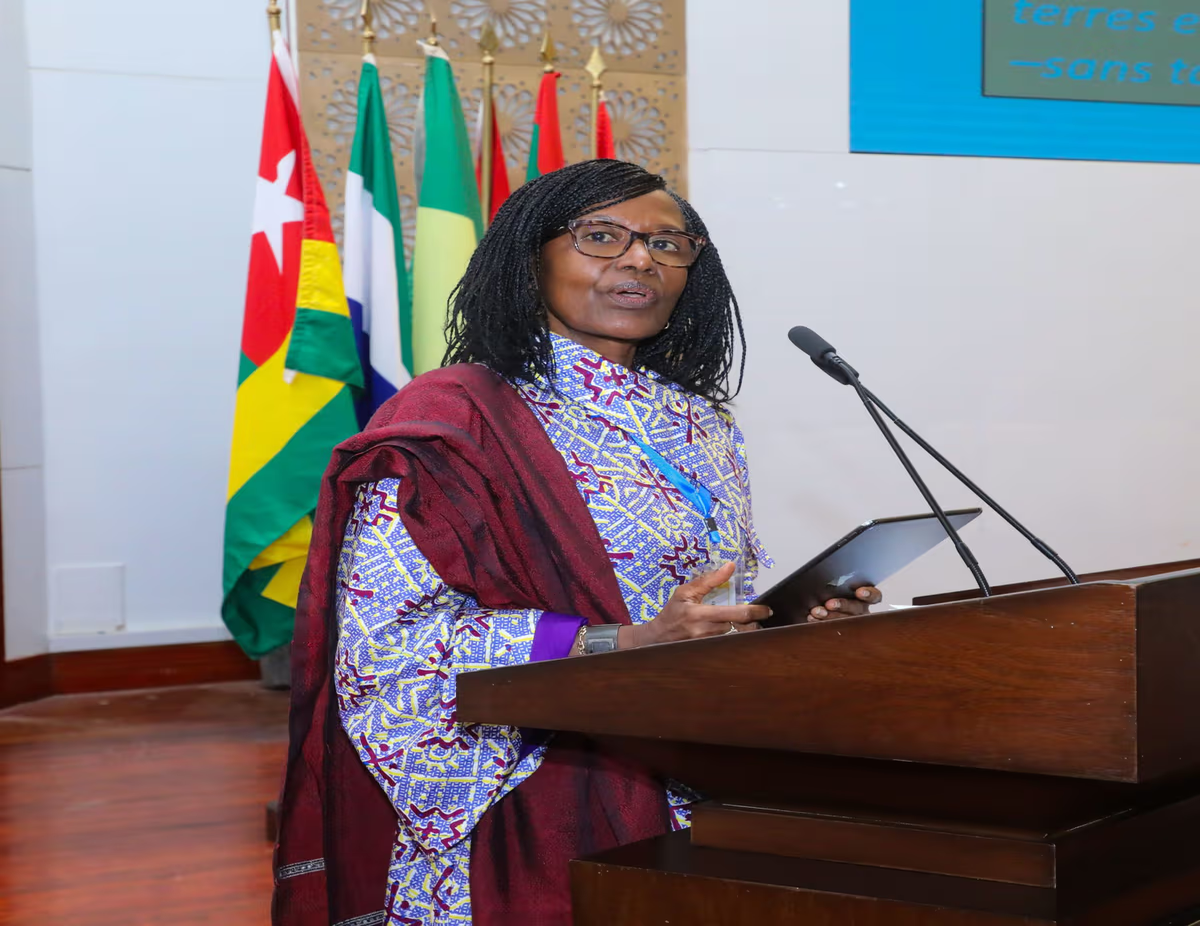
On the occasion of the 12th edition of FOMACO, held from 27 to 30 April 2026, Dr Charlotte Karibuhoye Said shares her assessment of this year’s Forum, reflects on its key takeaways, and discusses the priorities that should guide conservation efforts in the face of today’s environmental challenges.
How would you assess the 12th edition of FOMACO hosted in Mauritania?
This 12th edition of FOMACO confirmed that the Forum has become a key gathering for marine and coastal conservation stakeholders in West Africa. The chosen theme, “Ocean Health: A Lever for an Inclusive and Equitable Blue Economy,” proved highly relevant and closely aligned with current challenges.
The timing of this edition was equally significant, coming in the wake of the recent signing of the BBNJ Agreement, one year ahead of the International Marine Protected Areas Congress to be held in Senegal in March 2027, and three years before the global deadlines set by the Kunming-Montreal Global Biodiversity Framework and the Sustainable Development Goals.
Finally, the strong participation and diversity of stakeholders — ranging from local community representatives and researchers to protected area managers, technical and financial partners, and political decision-makers — reflected both the growing interest in these issues and the depth of commitment shown by West African actors and partners beyond the region.
In your view, what are the main conservation priorities in West Africa today?
The current global context, shaped by the climate emergency, the biodiversity crisis, but also by new opportunities linked to climate finance and the increasing recognition of local knowledge, requires us to rethink our priorities. A genuine paradigm shift is needed: conservation should no longer be viewed as a standalone sector, but rather as the very foundation of sustainable development and prosperity in our countries.
In this regard, I would highlight five priorities for West Africa.
The first is to position conservation as a cornerstone of sustainable development and prosperity. Conservation must be explicitly integrated into national development plans and sectoral strategies — including fisheries, agriculture, energy and infrastructure — recognising that natural capital underpins food security, public health, economic growth and resilience. As long as conservation continues to be perceived as separate from development, we will keep losing ground.
The second priority is to anticipate climate change through regenerative approaches. Beyond reactive adaptation, we need to model climate trajectories to anticipate shifts in ecosystems and species distributions and integrate these projections into land and marine spatial planning. Regenerative approaches — including agroecology, agroforestry, mangrove restoration and regenerative fisheries — offer some of the most practical solutions available today. They actively restore ecosystem functions while addressing food security and livelihoods.
The third priority concerns inclusive and equitable governance. Effective protected area management must go hand in hand with the recognition of rights, traditional systems of sustainable resource management and territories of life, notably through Other Effective Area-Based Conservation Measures (OECMs), which acknowledge locally governed conservation practices that have often remained invisible while generating benefits for communities. Such governance must also give a central role to young people, as preparing the next generation of conservation leaders is a major challenge, and to women, whose contribution to natural resource management remains too often underestimated.
The fourth priority is to diversify and secure conservation financing. Ensuring the long-term sustainability of conservation efforts requires substantially increasing public investment while developing innovative and durable financing mechanisms such as national conservation trust funds, climate finance, payments for ecosystem services, and greater mobilisation of private and philanthropic funding. Financial resilience has become a matter of survival for both conservation organisations and protected areas.
Finally, strengthening regional and transboundary cooperation is essential. Many of today’s challenges — including species migration, shared fish stocks, wildlife trafficking and transboundary ecosystems — extend beyond national borders. Regional collaboration platforms such as PRCM, RAMPAO and SRFC, together with policy harmonisation efforts, remain crucial in an increasingly uncertain geopolitical context.
This paradigm shift does not imply abandoning traditional conservation approaches. Rather, it broadens them. Targeted protection of endemic and threatened species, key biodiversity areas and critical ecosystems — including mangroves, seagrass beds, coral reefs and coastal forests — grounded in robust science and enriched by local knowledge, remains indispensable. At the same time, emerging technologies such as remote sensing, artificial intelligence and automated ecological monitoring provide powerful tools to strengthen field capacities and improve the quality of data that informs decision-making.
You moderated a Leaders’ Conference entitled “From Commitment to Large-Scale Impact for Sustainable Development in West Africa.” What were the key messages from this session?
The session aimed to generate strong, inspiring and forward-looking messages on the pathways needed to accelerate the transition towards a sustainable and inclusive blue economy, in line with international commitments and regional priorities.
Discussions focused on scaling up proven solutions that support an inclusive and sustainable blue economy, strengthening regional cooperation to significantly accelerate the protection and sustainable management of marine and coastal areas, transforming political and technical commitments into long-term investments, and reinforcing the role of civil society in ensuring a genuine transition towards an equitable blue economy.
The session yielded a number of important lessons. One of the main messages was the urgent need for strategic alignment among development sectors around shared priorities. Participants also stressed the importance of grounding public policies in local realities and promoting governance systems that ensure equity, strengthen capacities and respect the rights of local communities.
They further highlighted the importance of effective regional cooperation at multiple levels in the management of coastal and marine resources beyond political boundaries. Ambition and innovation commensurate with the scale of the challenges were identified as essential, alongside strong political will.
Finally, given the extent of ecosystem degradation, one conclusion emerged clearly: sustainable management alone is no longer sufficient. Regenerative approaches must now be promoted across all sectors of the blue economy and beyond.